About us
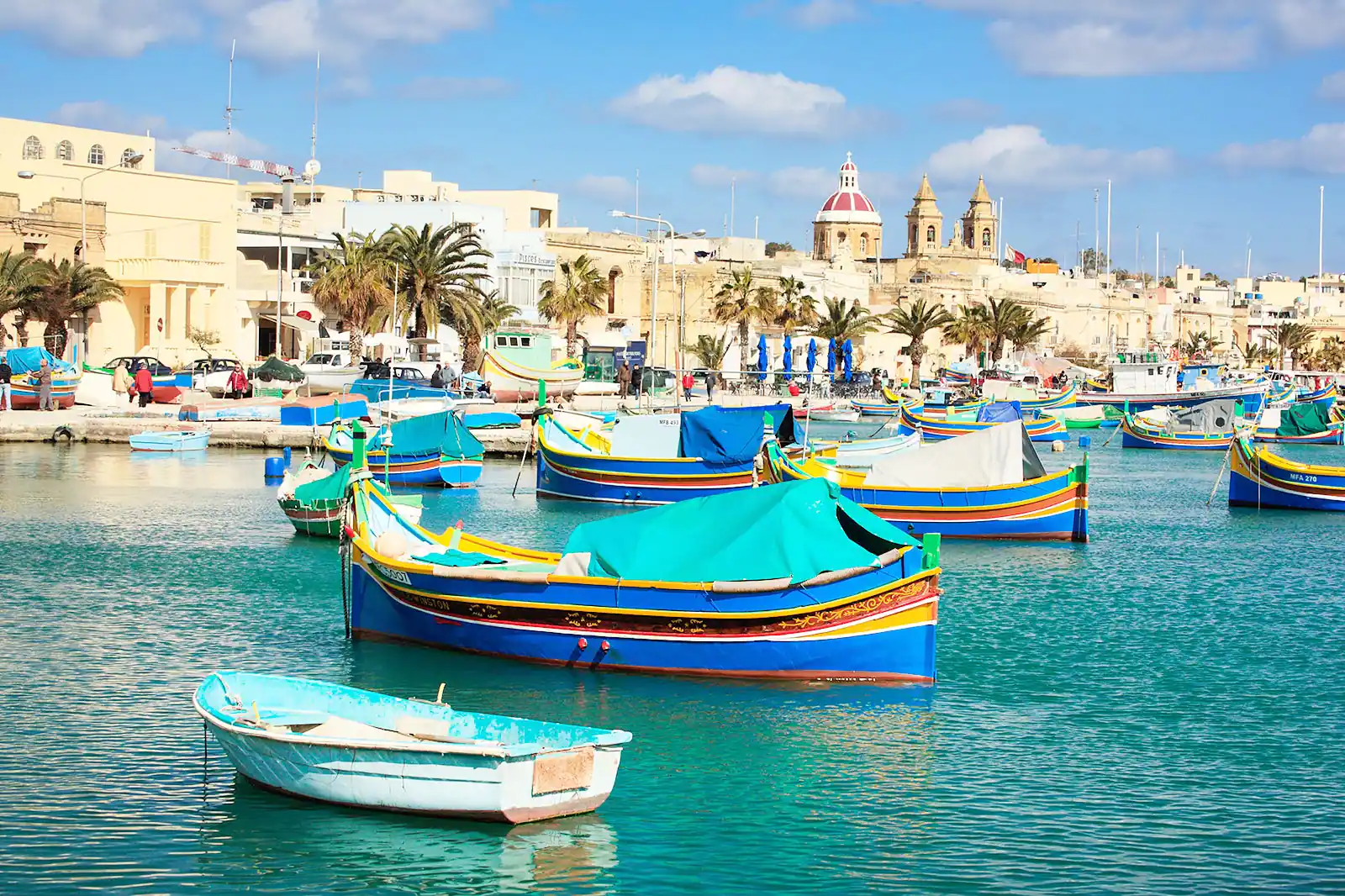
About Malta
The Maltese archipelago of islands basically consists of three islands: Malta, Gozo and Comino. Located in the Mediterranean Sea, just south of Sicily, their total population in 2007 just exceeded 400,000.
The largest island of the group is Malta, from which the archipelago takes its name. Valletta, the capital, is the cultural, administrative and commercial centre of the archipelago. Malta is well served with harbours, chief of which is the Valletta Grand Harbour. Malta’s international airport is situated five kilometres from the capital.
The second largest island, Gozo is topographically quite different from Malta. Quaintly attractive for its less industrialised way of life, Gozo can be reached from Malta by ferry-boat from Cirkewwa and Pieta, near Valletta, and by helicopter from the airport.
Comino, Cominotto, Filfla and St Paul’s islands are the other smaller islands of the archipelago. Of these, only Comino, straddled between Malta and Gozo, sustains a very tiny population. Turned into a popular resort because of a couple of very fine beaches, Comino can be reached from Cirkewwa, either by boat or by excursion ferries during the summer months.
Position: The distance between Malta and the nearest point in Sicily is 93 km. The distance from the nearest point on the North African mainland (Tunisia) is 288 km. Gibraltar is 1,826 km to the west and Alexandria is 1,510 km to the east.
This strategic position has allowed Malta to develop as an important trading post. The Malta Freeport is one of the Mediterranean’s leading ports for container transhipments.
The total area of the Maltese Islands is 316 km2. Malta has no mountains or rivers. A series of low hills with terraced fields on the slopes characterise the Island. The coastline of Malta is well indented, thus providing numerous harbours, bays, creeks, sandy beaches and rocky coves. The length of the shoreline round Malta is 136 km, and 43km round Gozo.
It is the climate, more than anything else, that has made Malta an important tourist resort in the centre of the Mediterranean. The average winter temperature is 12 degrees C (54 F.) There are really only two seasons in Malta: the dry summer season, and the mild winter season. The average annual rainfall is 578 mm (22.756 ins). Rain rarely, if ever, falls during the summer months.
Malta’s rich history will take you on a journey starting from the oldest free standing temples in the world, through various periods influenced by different cultures including Phoenician, Romans, St. Paul’s shipwreck, Byzantine, Arab, Norman, the Knights of St John, a brief French period and finally British. Malta gained independence from Britain in 1964, became a Republic in 1973 and joined the European Union in 2004.
Further useful information about our lovely island can be seen at http://en.wikipedia.org/wiki/Malta or http://www.visitmalta.com/

Our work process
01
Lorem ipsum dolor sit amet, consectetur adipiscing elit, sed do eiusmod tempor incididunt ut labore et dolore magna aliqua.
02
Lorem ipsum dolor sit amet, consectetur adipiscing elit, sed do eiusmod tempor incididunt ut labore et dolore magna aliqua.
03
Lorem ipsum dolor sit amet, consectetur adipiscing elit, sed do eiusmod tempor incididunt ut labore et dolore magna aliqua.
About us
Meet our team
Lorem ipsum dolor sit amet, consectetur adipiscing elit. Maecenas vitae tortor erat hasellus elementum at lacus id consequat.